 由 admin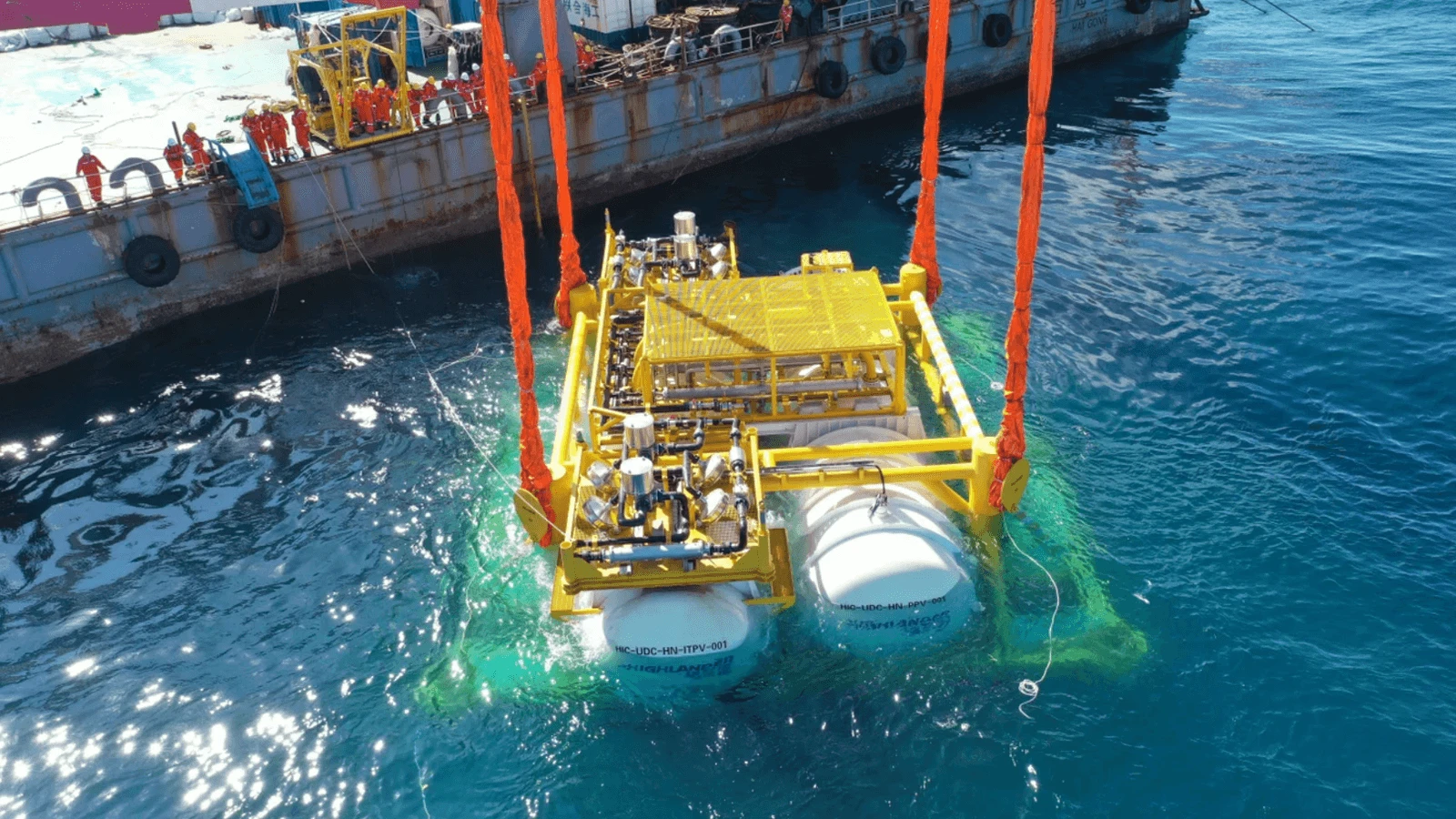
China’s Pioneering Underwater Data Center: A Milestone in Sustainable Computing
China has successfully concluded the first – phase construction of what it asserts to be the world’s inaugural Underwater Data Center (UDC). Situated in Shanghai’s Lin – gang Special Area, with an approximate investment of RMB 1.6 billion (equivalent to $226 million), this achievement marks a crucial milestone in the pursuit of sustainable solutions for meeting the escalating energy demands of China’s computing infrastructure.
1. Renewable – Powered Innovation
- The UDC is fully powered by wind energy, boasting a total power capacity of 24 megawatts. As per the Lin – gang management committee, its completion symbolizes a pivotal breakthrough in integrating renewable energy into data storage, processing, and distribution processes.
2. Overcoming Cooling Challenges
Beneath the Surface Cooling Advantage
- Traditional land – based data centers generate substantial heat and require effective cooling mechanisms for optimal operation. Air – conditioning systems alone can consume up to 50% of the total energy.
- Su Yang, the general manager of Shanghai Hicloud Technology (one of the project contractors), explains that Lin – gang’s UDC addresses this issue by submerging servers beneath the ocean’s surface. Here, seawater serves as a natural cooling system, reducing the energy demand for cooling to less than 10%.
Energy Efficiency Metrics
- The industry – standard metric for evaluating a data center’s energy efficiency is PUE (Power Usage Effectiveness). The first phase of the UDC is engineered to attain a PUE of no more than 1.15. Considering the theoretical ideal PUE is 1.0, this is an outstanding target. Additionally, China’s national policy mandates that new data centers must achieve a PUE of less than 1.25 by the end of 2025.
3. Multifaceted Environmental Sustainability
- The project showcases environmental sustainability in multiple aspects. Over 95% of its electricity is sourced from offshore wind turbines. Overall, designers estimate that this results in a 22.8% reduction in energy consumption. Huang Dinan, the president of Shenergy Group (another project contractor), highlights that the East China Sea provides unique offshore wind resources, with over 3,000 hours of annual utilization. Moreover, land usage is decreased by more than 90%, which is a significant advantage in densely – populated coastal cities like Shanghai, and the need for fresh water is completely eliminated.
4. Strategic Alignment and Complementary Initiatives
From East to West
- The UDC is not an isolated endeavor. As part of China’s broader national strategy, Shanghai aims to become a global hub of scientific and technological innovation by expanding its cloud – computing industry to over RMB 200 billion (roughly $28.25 billion) by 2027.
- This initiative also complements – and potentially offers an alternative to – the “East Data, West Computing” megaproject, which was launched in 2022. The latter project endeavors to construct data centers in China’s less – developed western regions to process data generated by eastern coastal economic centers. In contrast, Lin – gang’s UDC processes data near its source while leveraging marine resources to minimize negative environmental impacts.
5. Future Aspirations and Challenges
The Winds of Change
- The UDC’s 24 – megawatt capacity is merely the starting point. During the project announcement, the main contractors, including Shanghai Hicloud Technology, Shenergy Group, the Shanghai branch of China Telecom, and INESA, signed a new agreement to embark on another offshore – wind – powered UDC project with a far more ambitious target of 500 megawatts.
- However, transitioning from proof – of – concept projects to large – scale application presents formidable challenges. Wang Shifeng, the president of Third Harbor Engineering (involved in the current project), cautioned that “UDC construction is still in its nascent stage.” He emphasized that for wider deployment, optimization of operation and maintenance, along with technological reliability, must be accomplished first.
This story was originally published on WIRED en Español and has been translated from Spanish.