 由 admin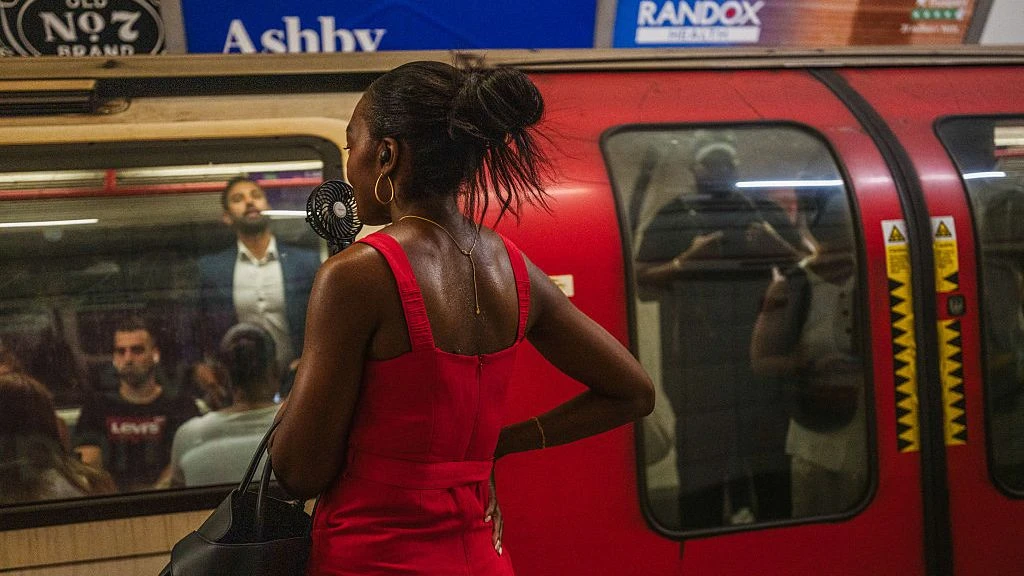
The Challenge of Cooling London’s Tube and Global Railways
The highest temperature ever documented by Jonathan Paul, a researcher at Royal Holloway, University of London, in a London Tube station reached approximately 42 degrees Celsius (107.6 degrees Fahrenheit). Paul utilizes a thermometer – equipped smartphone to obtain these readings. At 42°C, one would typically seek refuge in the nearest air – conditioned building. However, underground in the Tube, passengers are confronted with nothing but stifling tunnels and screeching trains.
The Tube network is constructed through thick clay. Since the tunnels were initially excavated, in some instances over 100 years ago, this dense material has been absorbing the heat generated by trains. Installing air – conditioning units in trains poses the risk of further heating the tunnels, as warm air from inside the carriages is expelled into the aging tubes.
Paul’s Innovative Cooling Solution
Paul has proposed an idea to cool the tunnels themselves. He notes that “water, as a refrigerant, has a high heat – holding capacity and is abundant beneath London.” He is developing a technology that would employ groundwater at around 10 degrees Celsius to transfer excessive heat away from underground stations. Currently, he is conducting tests deep within a chalk quarry west of London, near the town of Reading.
Trains, essentially metal tubes filled with passengers, are difficult to cool. With the increasing heat of summers due to climate change, ensuring the comfort and safety of public transport has become a matter of growing importance, not just in London but globally. Train passengers in Japan and Morocco have complained about inadequate air – conditioning during heatwaves this year, and a 2023 study reported train carriage temperatures as high as 47 degrees Celsius in India. Paul himself has witnessed the impact of overheating on overground train commuters, stating, “I’ve seen four people faint this summer.”
The first air – conditioned trains date back approximately a century. A 1933 article remarked, “Until now, everyone has dreaded a railway journey in summer.” Today, trains and underground transport networks can be so uncomfortable during heatwaves that many passengers avoid using them altogether.
Paul and his colleagues are confident in the efficacy of their solution. Descending 20 meters down a ladder into the chalk quarry near Reading, one can find their experimental setup. The chalk quarry contains multiple galleries of varying sizes, separated by doors. Paul explains, “We’re attempting to replicate real – life conditions in the Tube,” although the quarry environment is somewhat more drab, “very dark and quite dingy.”
In 2022, Paul and a colleague published a paper detailing how water from subterranean rivers or aquifers could be pumped into heat exchangers installed on the ceiling above subway platforms. Hot air drawn into these exchangers would transfer some of its heat to the water, enabling cool air to be expelled from the other side. The warmed water would then flow slowly through the ground, potentially to be cooled or treated elsewhere.
A prototype of this system is now installed at the chalk quarry. Paul reports that “for a nominal pumping rate over approximately an hour, we can lower the temperature of the [bedroom – sized] room by about 10 – 11 degrees [Celsius].” However, he and his colleagues still need to test its performance in larger spaces. Moreover, it remains uncertain whether Transport for London (TfL), the operator of the Tube, would ever implement this technology in practice.
Paul contends that his system could represent a significant improvement over a similar technology tested by TfL in 2006. That technology, no longer in use, attempted to cool using groundwater that had leaked into and then been pumped out of Victoria Tube station in central London. Paul posits that this water would not have been as cool as that directly sourced from nearby aquifers or subterranean rivers. Additionally, his system incorporates special filters to mitigate the risk of chalky water causing excessive limescale and blockages.
WIRED inquired of TfL whether it would consider adopting the system developed by Paul and his colleagues. Although TfL declined an interview, spokesman Melvin Lim stated that the organization has had to “carefully prioritize” investments in recent years. He emphasized the introduction of new air – conditioned trains for the Piccadilly Line next year, adding, “We remain open to measures that will help manage the impact of increasing temperatures due to climate change.”
Over the years, TfL has made numerous efforts to address the issue of hot tunnels, such as installing cooling panels on tunnel walls. These panels, which circulate water to remove heat from the air, were trialed in 2022 but are not currently in use. Paul argues that such a system could be prohibitively expensive.
Hassan Hemida of the University of Birmingham deems Paul’s water – cooling technology a “good idea,” yet it remains to be seen how much heat it could effectively remove from a real – life, bustling Tube station filled with passengers. Hemida also points out that certain railways, like super – high – speed trains traveling at 400 kilometers per hour, push the limits of cooling capabilities. The high – velocity air forced out by these trains causes a significant drop in air pressure around the heating, ventilation, and air – conditioning (HVAC) equipment on the train roofs, potentially leading to HVAC system failure. He mentions being contacted by Chinese colleagues seeking solutions to this problem.
Global Trends in Railway Cooling
More and more train operators are standardizing air – conditioning systems. For example, London’s relatively new Elizabeth Line features air – conditioning. A spokesman for Škoda Transportation, which recently introduced air – conditioned metro trains in the capital of Bulgaria, states, “Generally, every vehicle we produce now is equipped with AC.” Sharon Hedges, senior engagement manager at Transport Focus, an industry watchdog, adds, “When procuring new rolling stock, these aspects need to be at the forefront of consideration.”
In the Egyptian desert, German tech company Siemens is supplying a new set of high – speed trains capable of reaching speeds of up to 230 kilometers per hour. Siemens’ Velaro trains, used in many European locations, underwent rigorous testing for the Egyptian market. Last summer, one of the trains was taken to a test facility in Austria and exposed to extreme conditions, including temperatures as high as 60 degrees Celsius and strong winds. Björn Buchholz, head of HVAC and door systems, reports, “We are achieving an inside temperature of 26 degrees at the hottest outside conditions.” He also mentions the addition of a special filter system to remove sand and dust from the Egyptian desert, ensuring the AC functions as designed.
John Lawrence, a consultant for the rail industry at JPL Diversified, notes that while air – conditioning is popular among summer travelers, passive cooling measures also have a role. Many train stations already have awnings that shade platforms and carriages during boarding, but this is not universal. Lawrence suggests, “[The train] can be left baking in the sunshine—take the opportunity to reduce some of that solar gain.”
Once a train is outdoors, highly reflective paints or coatings could be beneficial. In the UK, the Rail Safety and Standards Board (RSSB), an independent standards and research organization, plans to trial a selection of such technologies on trains next year. Richard Walker, deputy director of research at RSSB, says, “There is a reasonable likelihood that some form of wrap or reflective coating could become a cost – effective approach to this issue.” His colleague Scarlett Hayward Mitchell, a research support analyst, adds that different trains, depending on their north – south or east – west routes, may require slightly different solutions, as the orientation can affect which parts of the vehicle are more frequently exposed to strong sunlight.
Given the high cost of railway – related projects these days, updates to air – conditioning systems or liveries are most likely to occur when train operators conduct scheduled updates to their rolling stock. In the UK, the transfer of some rail services to public ownership under Great British Railways could provide an opportunity to invest in new paintwork or liveries for trains. This is part of the reason why the RSSB has decided to research reflective materials at this time, as explained by Walker.
Meanwhile, Paul and his colleagues continue to refine their underground cooling technology at the chalk quarry test site. Paul states, “We’re building gradually to demonstrate that this can be rolled out operationally. We’re perhaps a year away from achieving this.” If he or anyone can pique the interest of TfL and successfully cool the Tube, it could open up new possibilities for railway cooling globally.