 由 admin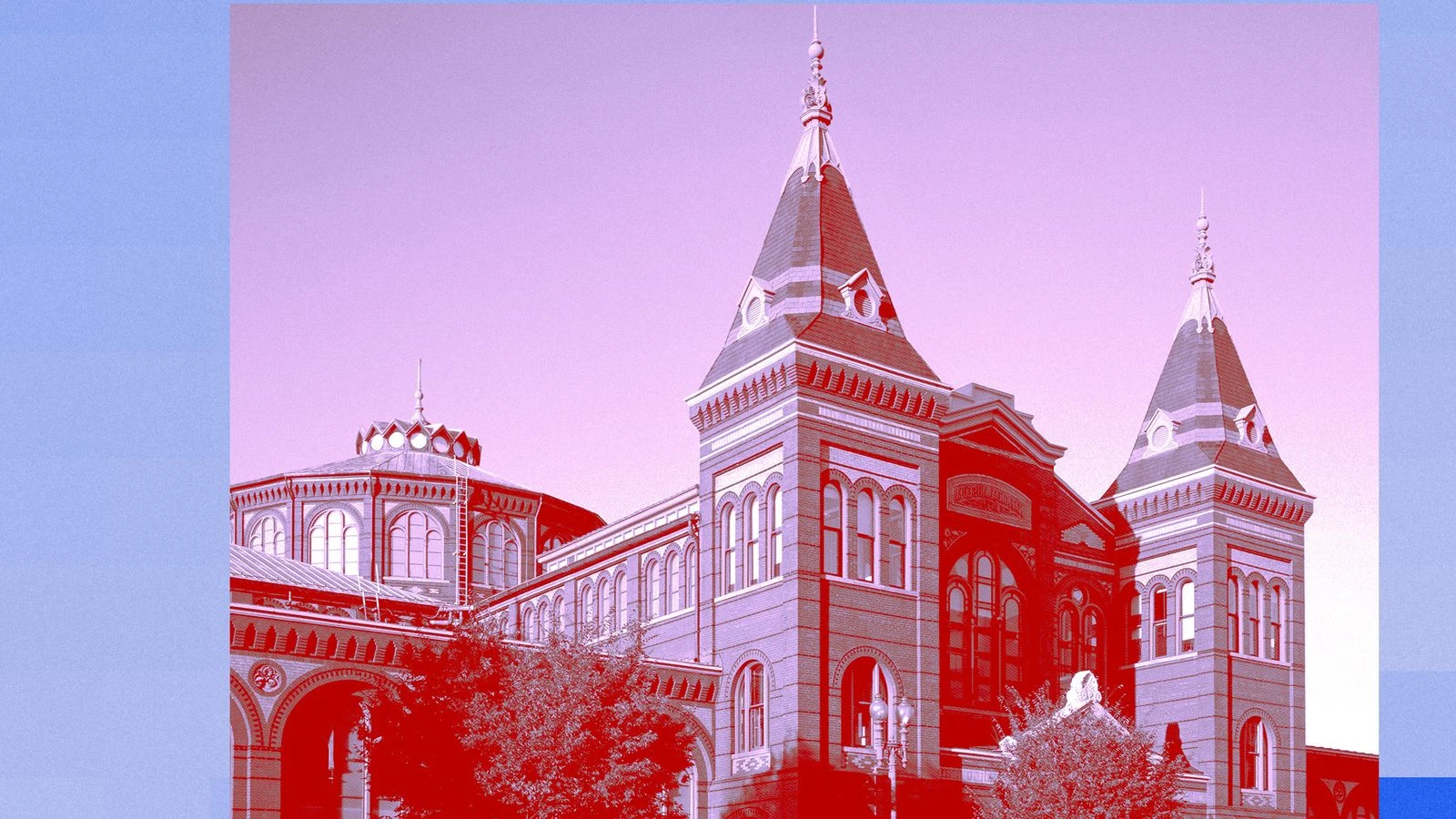
The Unveiling of Kryptos: A Turbulent Turn in a Cryptic Saga
Jim Sanborn was on the cusp of auctioning off the solution to Kryptos, a sculpture he had crafted for the CIA. This enigma had eluded solvers for 35 long years. Aspiring code – breakers regularly paid him a $50 fee to submit their guesses for the remaining unsolved segment of the 1,800 – character encrypted message, known as K4. Regrettably, all attempts had been in vain.
Then, on September 3, an email from Jarett Kobek landed in Sanborn’s inbox. It began, “I believe the text of K4 is as follows …” Sanborn had seen such claims thousands of times before. However, this time, Kobek’s submission was correct. “I was in a state of shock,” Sanborn recounted. “A truly profound shock.” The timing could not have been worse. At 80 years old, Sanborn had envisioned the auction as a means for someone to carry on the task of vetting potential solutions while preserving the allure of Kryptos. Additionally, he had anticipated fair compensation for his work.
What followed was even more disheartening. Sanborn promptly contacted Kobek and his associate Richard Byrne. To his astonishment, they revealed that they had not arrived at the solution through traditional code – breaking methods. Instead, Kobek, a California – based novelist (author of I Hate the Internet), had learned from the auction notice that certain Kryptos – related materials were housed at the Smithsonian’s Archives of American Art in Washington, D.C. He enlisted Byrne, a playwright and journalist, to photograph some of these holdings. To Kobek’s amazement, two of the images contained a 97 – character passage with words Sanborn had previously offered as clues. They had stumbled upon the full unencrypted text that the CIA, NSA codebreakers, along with numerous academics and enthusiasts, had been seeking for decades.
The secret of Kryptos had slipped from the artist’s grasp in the most mortifying way possible – Sanborn himself had inadvertently submitted it in a readable form to the museum. For 35 years, the Kryptos plaintext had been an unattainable summit. Suddenly, some had reached it – not through arduous climbing but by a fortuitous shortcut. Sanborn’s grand artistic vision, which aimed to illuminate the very concept of secrecy, was now at risk, as was the auction. He was left with the urgent task of determining a course of action.
Enter: The Media
The initial conversation between Sanborn and Kobek – Byrne was amicable. Kobek and Byrne emphasized their intention not to disrupt the auction. After hanging up, Sanborn contacted the auction house. This is where the situation began to deteriorate. “They said, ‘See if the gentlemen will sign NDAs and consider taking a portion of the proceeds,’” Sanborn recalled. “I replied, ‘Oh, I’m not sure about that. But I relayed the offer.’”
Kobek and Byrne were disinclined towards this arrangement and declined to sign. (Bobby Livingston, the executive vice president of RR Auction, refrained from commenting on the legal aspect but noted that an NDA “would be reassuring to our clients.”) Sanborn informed them of his plan to request the Smithsonian to freeze the archives, which they did. He assumed that Kobek and Byrne would maintain confidentiality. “If you keep it under wraps, you’re heroes in my eyes,” Sanborn told them.
“I thought all was well,” he said. “Then, out of the blue, [journalist] John Schwartz called me and informed me that these individuals intended to publish the solution in The New York Times.” Kobek explained to me that they had reached out to Schwartz, in part, to alleviate legal pressure. “We were bombarded with threats from the auction house’s lawyers, warning of various lawsuits,” he said. (When questioned about this, Livingston stated, “There are lawyers communicating with each other,” and added that there could be copyright issues if Kobek and Byrne published the plaintext.) On October 16, Schwartz broke the news, revealing to the world that the plaintext was out.
Sanborn informed me that Kobek had shared the plaintext with Schwartz over the phone. When asked about this, Kobek replied, “I cannot discuss that… I am in a precarious legal position.” Schwartz said, “Once my editors decided not to disclose the text in the story, I deleted it from my interview files. I no longer have it.” (So, there’s no point in asking him.)
RR Auction has since added a disclaimer to the Kryptos lot description, acknowledging the Smithsonian discovery. “The researchers have stated they do not plan to release the solution,” it reads, although RR also concedes that there are no guarantees that it won’t be made public at some point. “It undoubtedly impacts the auction,” Livingston said. “But we’re proceeding with it, having disclosed what transpired.”
Livingston pointed out that the firm is auctioning off not only the K4 plaintext but also a collection of valuable items, including coding charts, the original handwritten plaintext, a unique “proof of concept” copper plate, and Sanborn’s CIA visitor badge. For collectors of cryptographic history or art enthusiasts, these items are highly appealing. Sanborn has also promised to spend an afternoon guiding the winner through the Kryptos story and offering advice on how to continue the quest.
With the revelation that at least two people possess the K4 plaintext, RR and Sanborn have shifted their focus to another aspect of the Kryptos mystery. In recent months, Sanborn has been emphasizing that the ultimate solution to Kryptos is not merely the decrypted plaintext but another hidden puzzle that will surface once the plaintext is accessible. It’s akin to defeating the final boss in a video game only to discover another villain waiting to be vanquished. “I said years ago that there’s something beyond Kryptos,” he now says. “It’s a riddle. It holds significance and leads to something else. And now it’s being called K5.” Sanborn is evasive about the nature of K5. Is it one of the test passages Sanborn created in 1988 when he was determining what would fit on the sculpture’s surface? Or does it involve other elements of the CIA installation? Or perhaps it’s an entirely different Sanborn – designed puzzle? In any case, Sanborn and his auction house are now promoting the K5 solution as part of the auction prize.
It’s important to note that despite Kobek’s discovery, K4 remains unsolved in the traditional sense. The allure of Kryptos has persisted primarily because its ciphertext has stymied the world’s foremost codebreakers for 35 years. Elonka Dunin, a leading figure in the community dedicated to speculating about the Kryptos solution, stated that she has not noticed a decline in interest following the Smithsonian discovery. She noted that the Kryptos – focused community is more perturbed by the fact that the solution will be auctioned off, adding an element of uncertainty to the 35 – year – long pursuit, rather than the fact that two random researchers found a copy of the plaintext. (Nearly everyone agrees that Sanborn deserves a more comfortable retirement fund.) To her, the true goal is to actually crack the code, a sentiment echoed by Sanborn. “They merely discovered it; they did not decipher it,” he told me.
Currently, the parties are in an uneasy standstill. The auction is underway; as of this writing, the highest bid has exceeded $43,000. The auction house has not revised its estimated closing bid of $300,000. Kobek expressed regret for ever sending Byrne to the Smithsonian. “In a way, it’s a tragic tale,” he said. Sanborn is in a state of distress.
Nonetheless, I do not believe that the Kryptos saga has been irreparably damaged. I have always regarded Sanborn’s artwork as a brilliant commentary on the shadowy world of espionage, where appearances are often deceptive and outcomes lack clarity. To date, the process of solving Kryptos – or even determining its solvability – has been a complex web of intrigue, reminiscent of a John le Carré novel. The anticlimactic discovery of the plaintext, due to Sanborn’s oversight, has shifted the narrative to the tragicomic realm of Mick Herron’s Slough House series.
There is still hope for a satisfying conclusion. Sanborn’s aim in auctioning off the solution has always been for the winning bidder to continue vetting guesses until someone finally arrives at the answer through perseverance and mathematical prowess. To assist his successor, Sanborn has been collaborating with technologist and entrepreneur Igor Jablokov to develop an AI system that can autonomously sift through the submissions. Jablokov described it as a virtual Sanborn.
Jablokov is an ardent Kryptos enthusiast; he even owns a unique replica of the sculpture created for an episode of the TV show Alias. He is also financially well – off, having sold his first company to Amazon. He informed me that earlier this year, upon learning of Sanborn’s financial situation, he offered to purchase the solution and take over the vetting process. Sanborn could not pursue this option as he had already committed to the auction.
Upon hearing this, it occurred to me that I might be speaking to the potential winning bidder for the Kryptos secret – and the person who will safeguard its remaining mysteries. I asked Jablokov if he intended to do just that. The hesitation following my question suggested that I might be onto something. “I’ll leave that open to interpretation,” he said. “But clearly, I’m involved and interested.” We’ll have to wait and see what happens on November 20 when the auction concludes. I suspect that regardless of the outcome, ambiguity and mystery will continue to shroud one of the greatest art projects of our era.