 由 admin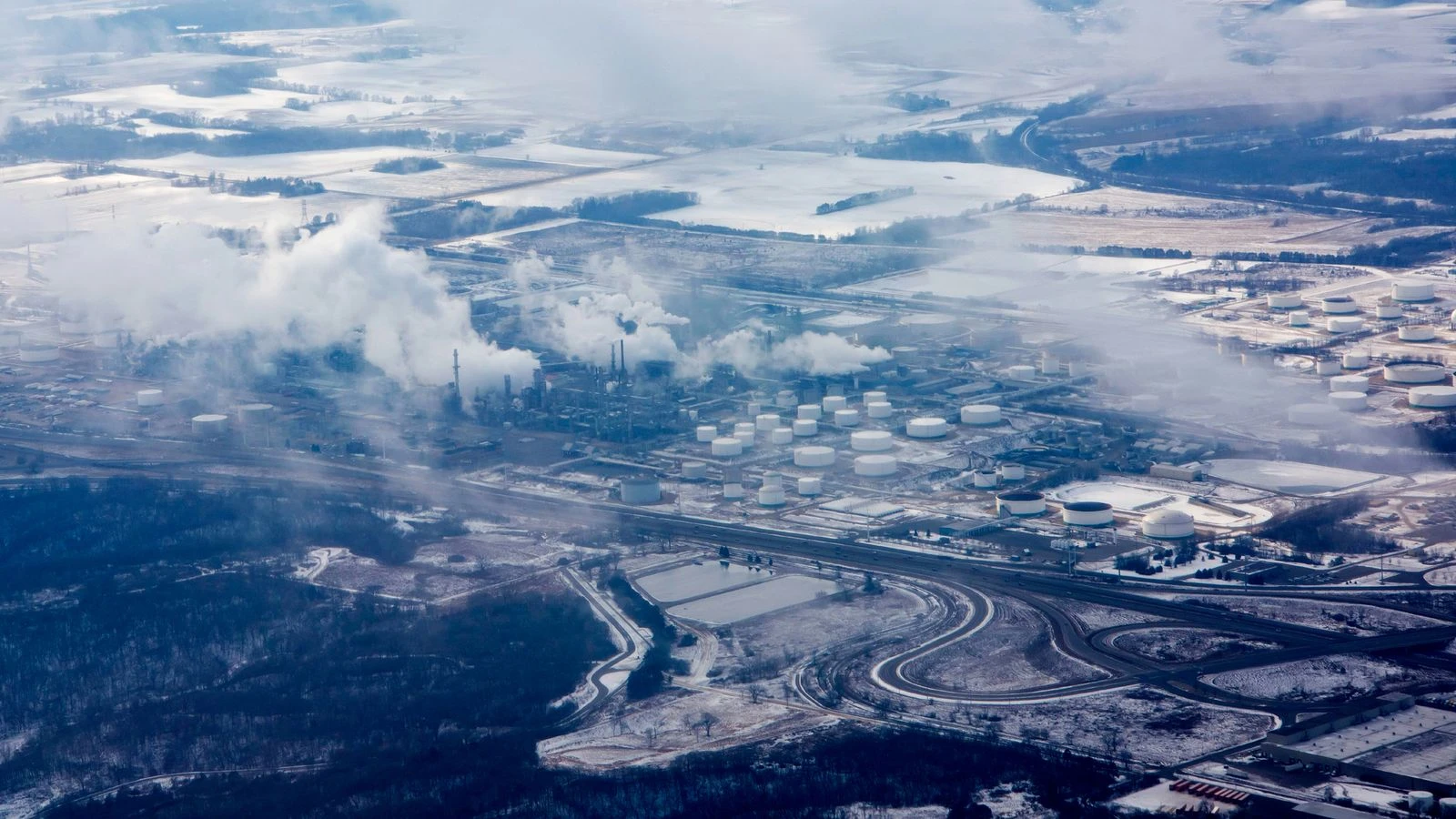
The Future of Sustainable Aviation Fuel (SAF) in the Upper Midwest: A Complex Landscape
Traverse the 10 – inch pipeline extending southward from the Minneapolis–Saint Paul International Airport. After a 13 – mile journey, one arrives at a site with the potential to become a major future hub for sustainable aviation fuel in the upper Midwest.
In a September – announced deal, the Pine Bend Refinery, owned by Koch Industries and located in Rosemount, Minnesota, is set to receive sustainable aviation fuel (SAF). This is fuel derived from non – petroleum feedstocks such as renewable materials or waste. The refinery will blend this SAF into its conventional jet fuel and then transport the fuel mixture via the pipeline to the airport, where it will be utilized by Delta Airlines and other carriers.
The project’s proponents, including financial backers Deloitte and Bank of America, stated last year that by 2025, up to 60 million gallons of blended fuel, potentially containing up to 50 percent SAF, would be flowing. Their long – term aim is to produce 1 billion gallons of SAF annually. This would not only exceed the demand at the Minneapolis airport but also position the hub as a supplier for other airports across the country and potentially globally. (No specific timeline has been set for the refinery to reach this larger production target.)
However, this project, like others of its kind, is contingent upon financial – support frameworks such as tax credits or loans established under the Biden administration’s landmark 2022 climate law, the Inflation Reduction Act. These incentives are now at risk of being withdrawn.
Late last month, Montana Renewables, one of the few US SAF producers and the planned provider of the initial batches for the Minnesota hub, reported that the first $782 million tranche of a $1.67 billion loan from the Department of Energy was experiencing a “tactical delay to confirm alignment with White House priorities.” (On February 11, US senator Steve Daines of Montana announced that the funding, which is crucial for the project’s financing, had been unfrozen.)
Scott Irwin, a professor of agricultural and consumer economics at the University of Illinois, contends that federal incentives of this nature are “on life support” under the Trump administration. According to Irwin, the Trump administration has demonstrated a willingness to completely dismantle the Inflation Reduction Act and its associated funding, even if it means reneging on commitments to farmers and businesses that have already commenced climate – smart initiatives.
While state incentive programs and low – carbon fuel standards still support SAF production, Irwin questions who could substitute the federal government in the credit stack if the funding is withdrawn. “Without the incentives in the Inflation Reduction Act, SAF is effectively stalled,” he remarks.
The Refinery’s Calculations: A Precarious Balance
Late last year, WIRED engaged in a conversation with Jake Reint, the vice president of external affairs for Flint Hills Resources. This company, a part of Koch Industries, owns the Pine Bend Refinery along with several other refineries, petrochemical plants, and pipelines. (Flint Hills Resources is the entity that negotiated the deal with Delta and other corporate partners for the use of blended fuel from Pine Bend.) Even prior to Donald Trump’s re – election, Reint expounded on the challenges of scaling up the SAF industry.
Under the current plan, Pine Bend will unload SAF produced elsewhere from trucks operated by Shell, the designated distributor. Subsequently, it will blend this SAF with its existing jet fuel mix. This process requires Pine Bend to order specialty pumps, which Reint notes will not be delivered for a year. Moreover, these pumps cannot be ordered until a comprehensive planning process is completed, including accurate short – term demand estimates.
Reint also emphasizes the potential for project implementation issues, stating, “because we’re in phase zero.” He further disclosed that the refinery will initially blend only small quantities of SAF, saying, “We might incorporate it at a 10 percent level.” Additionally, he expressed a cautious perspective on producing a commodity that is significantly more expensive than conventional jet fuel, stating, “We will fulfill our role in the supply chain, but we will be a forthright broker.”
In a February email, Reint indicated that the refinery is making progress on the blending facility and anticipates having the initial phase operational later this year or in early 2026.
Building and operating a refinery is an inherently arduous endeavor. To achieve its stated goal of 1 billion gallons per year, the Minnesota hub will need to integrate several new production facilities that utilize novel feedstocks to produce SAF. Meanwhile, in 2024, the SAF and broader clean fuels industries witnessed significant setbacks, such as the bankruptcy of Fulcrum Bioenergy, involving major investors. This has led many to adopt an even more circumspect approach to the sector.
The United States’ Position in the SAF Race: At Risk of Lagging
The uncertainty brought about by the Trump administration has prompted investment fund Kerogen Capital to consider SAF development investments in Europe, Asia Pacific, and the Middle East. However, Mark Chen, Kerogen’s chief operating officer, believes that the airlines’ demand for SAF is so substantial that it could potentially drive the market forward, regardless of the policy environment.
He states, “The demand is not regulation – driven. In fact, most high – quality SAF producers face more demand than they can supply.” He further reveals that one of Kerogen’s portfolio companies, Hong Kong – based EcoCeres, has completely exhausted its SAF supply and is planning to construct a new plant that would double its capacity, which Chen anticipates will also be fully sold.
The growing demand for SAF will intensify the competition for feedstocks. Used cooking oils and waste fats are likely to serve as the initial feedstocks for the first 3 billion gallons of SAF production, as per the US Federal government’s SAF Grand Challenge, which outlines a roadmap for achieving 100 percent SAF use by 2050. Nevertheless, these supplies are limited. To scale up production beyond this, the industry will need to utilize plant – based feedstocks, including new commodities like camelina. Other companies are exploring the production of SAF from hemp, sweet potatoes, or even milk waste.
William Hohenstein, a director at the US Department of Agriculture, stated during a panel discussion in September, “It is extremely challenging to introduce a new commodity in the United States. This doesn’t occur frequently, and the reason is that farmers need assurance that if they invest in growing a crop, there will be a market. Similarly, on the industry side, one needs to be certain of the feedstock’s availability.”
According to a report from the US Department of Energy, the United States could theoretically acquire the necessary renewable biomass resources to meet the milestones of the SAF Grand Challenge. However, the development of viable feedstocks and energy crops must surmount obstacles such as generating sufficient demand as SAF production expands, competing with food crops for farmland, and addressing the lack of transportation infrastructure.
Hohenstein elaborates, “It’s not just about the farmer and the end – consumer. All aspects of the supply chain, including crushing capacity and transportation capacity, must develop in tandem.”
Peter Frosch, the CEO of Greater MSP, a Saint Paul – based nonprofit economic development organization facilitating the advancement of the Minnesota SAF hub, approaches these challenges with equanimity.
He reports that, thus far, forming the SAF demand consortium with Delta, Bank of America, Deloitte, and Ecolab, along with the ongoing development of the blending facility infrastructure, has attracted the interest of project developers and potential off – takers. One such partner, DG Fuels, announced in October the construction of a new $5 billion plant in Moorhead, Minnesota. This plant will ultimately produce 193 million gallons of SAF per year using corn stover and timber waste as feedstocks, which will then pass through the Pine Bend refinery.
Frosch remarks, “There are numerous reasons why this might not succeed,” enumerating a litany of challenges the hub faces, such as persuading enough farmers to grow a new crop or modify their farming practices, auditing the carbon intensity of sustainable fuels, ensuring the availability of state and federal incentives, and attracting additional investment and production partners.
In an emailed statement, Frosch notes that potential changes to tax credits or the DOE’s Loan Programs Office have not directly affected the Minnesota hub’s discussions with potential SAF producers. However, he adds that the uncertainty in Washington “does not facilitate rapid and confident decision – making.”
The hub is in discussions with producers employing a diverse range of feedstocks and technologies, from using wood waste to produce SAF to generating it “literally out of thin air” through a process of direct carbon capture from the atmosphere.
He concludes, “All of this is difficult; that’s the very nature of it. It’s industrial innovation. We seem to be at the forefront of undertaking this on such a scale, which means we’re likely to encounter some of the significant issues that everyone will eventually have to address.”