 由 admin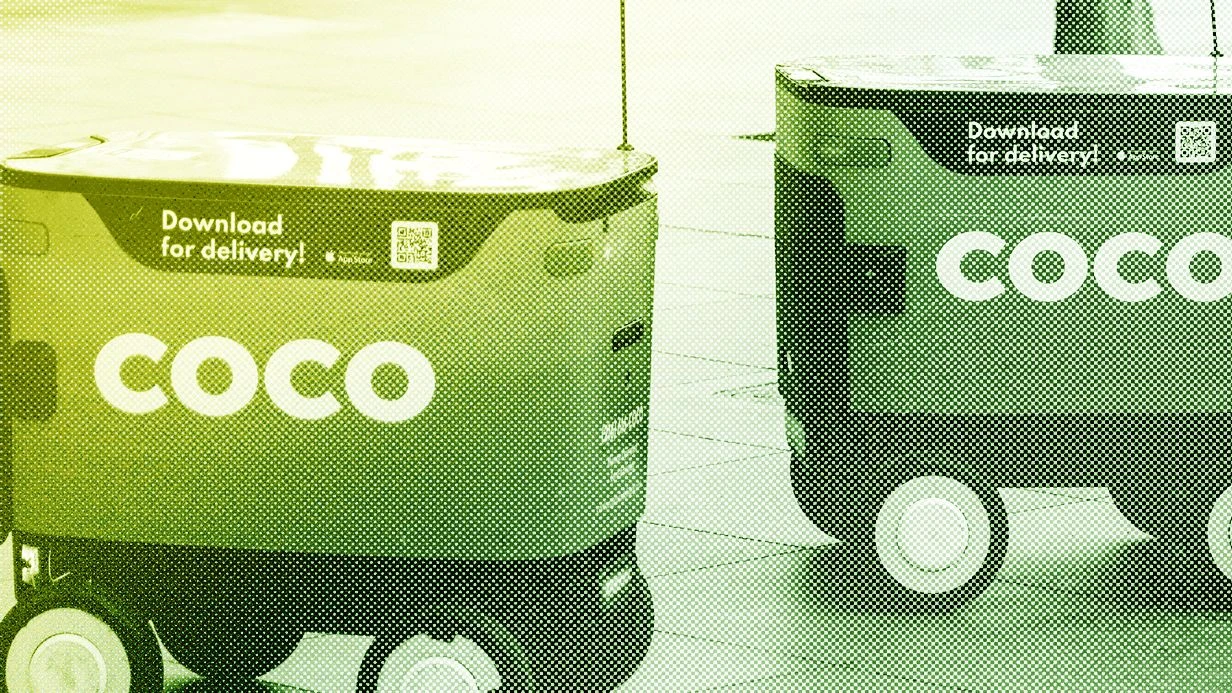
Introduction
All products showcased on WIRED are meticulously and independently selected by our editors. Nevertheless, we may receive compensation from retailers and/or from product purchases made through these links. For more information, please refer to relevant details.
Earlier this week, DoorDash revealed its new autonomous robot, Dot. The company indicates that this is part of its objective to establish a “hybrid” delivery model. This development is the latest indication of a resurgent interest in the delivery robot industry after years of challenges. WIRED’s Aarian Marshall joins us to explore why this is significant for everyone, regardless of whether they use delivery services.
Mentioned Articles
- “DoorDash’s New Delivery Robot Rolls Out Into the Big, Cruel World” by Aarian Marshall and Boone Ashworth
- “This Food – Delivery Robot Wants to Share the Bike Lane” by Alex Davies
Social Media Handles and Contact
You can follow Michael Calore on Bluesky at @snackfight, Louise Matsakis on Bluesky at @lmatsakis, and Aarian Marshall on Bluesky at @aarianmarshall. If you have any inquiries, please write to us at uncannyvalley@wired.com.
How to Listen
You can listen to this week’s podcast via the audio player on this page. For those who wish to subscribe for free to receive every episode, here are the methods:
– If you are using an iPhone or iPad, open the Podcasts app or simply tap this link. You can also download apps like Overcast or Pocket Casts and search for “uncanny valley.” We are also available on Spotify.
Transcript Note
Please note that this is an automated transcript, which may contain inaccuracies.
Podcast Dialogue
Michael Calore: Hey, Louise, how are you?
Louise Matsakis: Hey, Michael, I’m well. How about you?
Michael Calore: I’m doing fine. Thanks for filling in for Lauren this week.
Louise Matsakis: Yes, Lauren is on an exciting trip to Arizona, and I’m sure we’ll hear more about it soon. As her editor, I’m glad to step in when she’s off on an adventure.
Michael Calore: Alright, today we’ll be discussing robots and delivery apps, an area that WIRED’s Aarian Marshall has been closely following for years. Let’s welcome Aarian back to the show. Hello, Aarian.
Aarian Marshall: Hello.
Michael Calore: Given today’s topic, I’m curious to know what’s the most unexpected item each of you has ordered through a delivery app?
Louise Matsakis: Recently, I was on a press trip to China. During an interview, I got pen ink all over my white pants while taking notes. So, I ordered the Chinese equivalent of a Tide pen. I think that’s the oddest thing I’ve ever ordered on – demand.
Aarian Marshall: Even before the advent of delivery apps, I was averse to paying for delivery. I have great respect for delivery workers, but I’d rather allocate my money elsewhere. Recently, I was really desperate and ordered pad Thai, which was quite a departure for me.
Michael Calore: Is that your most unexpected order?
Aarian Marshall: Yes, the fact that I used the delivery app at all is unexpected.
Michael Calore: I live in one of the most densely – populated areas on the west coast of California, yet I rarely use delivery apps. The most unexpected thing I’ve ordered is probably a bottle of Jameson Irish whiskey.
Aarian Marshall: Respect.
Michael Calore: This is WIRED’s Uncanny Valley, a show exploring the people, power, and influence of Silicon Valley. Today, we’re discussing how, despite years of struggles, delivery app companies are still attempting to deploy robots to deliver items right to your doorstep. Earlier this week, DoorDash unveiled Dot, its new autonomous robot. The company claims it’s part of a “hybrid work model for future deliveries,” collaborating with humans, as well as drones and autonomous vehicles. DoorDash is not alone in this pursuit. The autonomous delivery industry has been gradually evolving, facing numerous challenges along the way. We’ll delve into why some companies are still heavily investing in delivery robots, the race to develop suitable technologies for them, and what the presence of these robot fleets in our cities could mean for all of us. I’m Michael Calore, the director of consumer tech and culture.
Louise Matsakis: I’m Louise Matsakis, the senior business editor.
Aarian Marshall: And I’m Aarian Marshall, a staff writer covering cities and transportation.
Michael Calore: Aarian, you attended the DoorDash event this week where they unveiled Dot. Tell us about it.
Aarian Marshall: I attended the event virtually. My colleague Boone Ashworth attended in person in San Francisco. We knew there would be a robot, but I was struck by Dot’s cuteness and its size. Most delivery robots in use today are relatively small, typically reaching up to an adult’s knees or slightly taller. Dot is almost five feet tall, covered in cameras – nine cameras and seven other sensors. It’s bright red, has large pixelated eyes, and to access the DoorDash items inside, its “mouth” opens like Pac – Man. In promotional videos, it has a WALL – E – like voice to communicate with consumers. While it’s a cute device, we have questions about its real – world operation. DoorDash says it will operate on sidewalks, roads, and bike lanes, which is a complex challenge for an autonomous vehicle, given the different scenarios and obstacles in each environment. It will be interesting to see how it progresses.
Louise Matsakis: I’m particularly interested in one detail. Boone gave Dot a little kick to see how it would react. Considering the bike lanes, obstacles, and the threat of people, is this why DoorDash gave it cute features, perhaps to reduce the likelihood of people kicking it like Boone did?
Aarian Marshall: Absolutely. There’s a body of research focused on making robots more acceptable to humans. In my reporting, I spoke to experts about technologies, not necessarily those of Dot, but other robots use to protect themselves. For example, Starship Technologies, a leader in this field, has trained its robots to avoid children because kids tend to interfere with them. Instead, if an adult is present, the robots are trained to approach the adult. Companies are clearly considering how to ensure their robots’ safety in our complex world, and one way is to avoid children.
Michael Calore: Also, they probably shouldn’t deploy them in Philadelphia.
Aarian Marshall: Yes, that’s another good point.
Michael Calore: Dot isn’t DoorDash’s first robot, right? Earlier this year, the company announced a partnership with Coco Robotics.
Aarian Marshall: Correct. Coco is a LA – based company currently operating in several cities, including the west side of Los Angeles. They have smaller, more traditional sidewalk robots that are visible in certain LA neighborhoods. They’re out delivering food, partnering with DoorDash for a few months now.
Michael Calore: But Dot is developed by DoorDash Labs, the company’s automation and robotics division. Why is DoorDash approaching this from two angles?
Aarian Marshall: It’s a valid question. DoorDash told me they have data from millions of deliveries, which they believe will help them run the best robotics service. Additionally, they like having full control over the process. Also, like many tech companies in Silicon Valley, DoorDash is eager to demonstrate its thoughtfulness regarding artificial intelligence and robotics. By operating its own robotics company, it can show investors and potential employees its commitment to these key tech trends.
Louise Matsakis: I have a question about these robots. When Coco Robots were first deployed in LA, I noticed they seemed to be mostly remotely controlled by contractors, like someone in an office playing a video game instead of a traditional delivery person. Has the technology advanced significantly since then? Is this part of the reason DoorDash is now developing its own in – house solution, as we’re getting closer to full autonomy?
Aarian Marshall: It’s a great question, and the answer isn’t entirely clear. Coco has informed me that their robots are now operating more autonomously than in the past. There are still operators behind screens, monitoring the robots’ views and intervening when they encounter problems. We don’t know the exact frequency of these interventions, but the technology has improved. However, there’s a significant difference between Coco’s robots and those of a company like Waymo, whose autonomous vehicles operate mostly autonomously on the roads. Waymo has invested billions over the years. Whether DoorDash is willing to invest that much to achieve true autonomy is an open question. They wouldn’t disclose their current investment amount, which I find interesting. It’s an opportune time to enter the market, but significant investment will be required.
Michael Calore: It’s an interesting time for them to enter, as the excitement around delivery robots peaked just before and in the early months of the COVID – 19 pandemic (2018 – 2020), then cooled off. Are there other companies that have persevered or those that faced setbacks and pulled out?
Aarian Marshall: The pandemic initially increased enthusiasm for these robots as people were afraid of human contact. Amazon, FedEx, and others invested heavily. Postmates started Serve Robotics, which is still operating as a spinoff. Over time, however, Amazon and FedEx abandoned their projects. This decline in interest is partly due to the technical complexity of creating a robot that can operate in various contexts. Roads have specific rules, but sidewalks are more chaotic, with a wide variety of pedestrian behaviors and obstacles. While investment and enthusiasm have waned in recent years, delivery robots are still around. For example, Sam Altman invested in Coco Robotics earlier this year, but the scale is smaller than before.
Louise Matsakis: I’ve seen many videos of these delivery robots getting into unexpected jams. In LA, tree roots often disrupt sidewalks, creating obstacles for Coco Robots. How realistic is it to overcome these challenges?
Aarian Marshall: It comes down to the “where” rather than the “when.” It’s possible to build a robot for specific contexts. DoorDash aims to operate in suburbs, where sidewalks may be wider and have bike lanes, presenting a less complex environment. By limiting the operating space, robots can become more proficient. Coco, for instance, knows about problem areas like the corner with the crazy tree root in LA. They account for this in data collection and human intervention. However, the cost – effectiveness in terms of labor savings, which is the theoretical goal of these robots, remains uncertain.
Michael Calore: It makes sense that much of the current action in delivery robots is on college campuses. The layout of a college campus, with wide, well – paved, well – lit paths and pedestrian – only areas, provides an ideal testing ground. It lacks the complex infrastructure of city sidewalks, and the density allows for profitable food delivery.
Aarian Marshall: That’s a great point. Starship Technologies, an Estonian company, is one of the largest in this space and is targeting university campuses. As you said, the sidewalks are better maintained, people are friendlier, and from a business perspective, college students may be less price – sensitive, especially late at night, making delivery an attractive option.
Michael Calore: All right, we’ll take a break. When we return, we’ll further explore what robots like Dot mean for city dwellers, whether they use delivery services or not. Stay with us.
Welcome back to Uncanny Valley. Today, we’re discussing delivery robots and the renewed industry interest. Aarian, one detail from your reporting caught my attention and gave me pause – Dot is trained to use bike lanes. While it may seem minor, it opens up a host of issues. In San Francisco, where I live, we have decent bike infrastructure, but in other cities where these robots are being deployed, like Phoenix, the bike infrastructure is scarce outside the city center. Bike lanes are already crowded with e – bikes, cargo bikes, delivery bikes, and two – wheeled scooters, which is good for reducing car usage but bad because now there’s a perception that a five – foot – tall robot can also use the bike lane. As someone who covers transportation and lives in a city, what do you think?
Aarian Marshall: I agree, Mike. This is a concerning issue. Private companies have tried to encroach on bike lane space before, like Amazon and DHL with their delivery bikes. While it takes people out of cars, it also reduces space for commuting cyclists. DoorDash isn’t the first to experiment with robots in bike lanes. There’s a company in Ann Arbor that’s been doing this for a few years, though it’s smaller now. Additionally, regulations are complex. During the sidewalk robot boom, Amazon lobbied state legislatures to change vehicle definitions to allow robots on sidewalks. Regulations also vary regarding who can use bike lanes, with some cities banning e – bikes from them. If companies want to operate delivery robots in bike lanes globally, they’ll need to engage with many politicians.
Louise Matsakis: I find this frustrating. In many parts of the country, we barely have enough bike lanes for bikes, and now having to compete with robots seems unfair. But if it means more bike lanes, I’m somewhat in favor. I’d rather have tech companies advocate for more bike lanes than less for their autonomous cars.
Aarian Marshall: Definitely.
Michael Calore: I think it would be amusing if the law of induced demand led to the addition of multiple bike lanes in places where there’s only one currently.
Louise Matsakis: That would be great. More bike lanes are my bottom line.
Michael Calore: Okay, we’ve discussed the transportation aspect. Now, let’s talk about the labor front. The United States has the second – largest food delivery market globally, after China. Tens and hundreds of thousands of people work as contracted delivery people. With the increasing capabilities of robots and drones, and the talk of AI replacing jobs, we may be approaching an inflection point. Do you think that in the hybrid model companies like DoorDash are building, robots will outnumber delivery people? Will there be a balance? What will it look like?
Aarian Marshall: At present, it’s difficult to envision a world where robots outnumber human delivery people. When people pay extra for food delivery, they often expect the food to reach their door, which may involve tasks like going up steps, entering a gated community, or entering a code. These are challenging for robots but easy for humans. Achieving robot proficiency in these tasks would require substantial investment, and I’m not sure it’s worth it. Louise, I’m interested in hearing about the situation in China, as I know it’s different.
Louise Matsakis: In China, sometimes the delivery journey involves both a robot and a human. This is often seen in hotels. When you order food to your hotel room, the delivery worker hands it to the robot, which then takes it to your room via the elevator. This is a simple, predictable journey. However, this hasn’t changed the overall labor dynamic. The delivery worker can now make more deliveries as they don’t have to go to the room. The demand for their labor remains high, as delivery workers still make up a large portion of the working population in China. The chaotic streets of cities like Shanghai are too difficult for autonomous robots to navigate currently.
Michael Calore: That’s a true hybrid model, but I don’t live in a hotel.
Louise Matsakis: It also happens in some residential complexes, but it’s usually a similar short route in the elevator.
Aarian Marshall: Louise, this reminds me of something I learned while reporting. Two researchers at Carnegie Mellon followed a sidewalk robot test in Pittsburgh for a few weeks and found that the human labor of delivery was often displaced to other workers. For example, someone had to clean the robot when spills occurred, ensure items were in the right slots, and retrieve the food from the curb. So, it may not mean less work, just a redistribution or more work for others.
Louise Matsakis: That’s a very good point. It’s often about modifying labor rather than eliminating it.
Michael Calore: All right, we’ll take a quick break and then return with recommendations. Thank you both for a great conversation about robots. Now, we’re here to deliver some recommendations for our listeners. Aarian, you go first. What do you recommend this week?
Aarian Marshall: That was a great lead – in, Mike. I recommend the JBL Clip 5, a Bluetooth speaker. I’m not an audiophile, but I think it has excellent sound. I received one for my birthday recently and like to carry it around. It has a handy clip that can be attached to a shower, backpack, or even a dog while traveling. For a relatively inexpensive speaker, it offers good sound quality, and I’ve enjoyed using it.
Michael Calore: Nice. How much is it?
Aarian Marshall: It’s currently priced at $69.95.
Michael Calore: That’s quite affordable for a good Bluetooth speaker.
Aarian Marshall: I think so too.
Michael Calore: When people ask me which Bluetooth speaker to get, I usually recommend the UE Boom or the JBL Clip. It’s not like people ask me all the time, maybe a couple of times a year.
Louise Matsakis: I was like, “Wow, Mike, are you a gear editor or something?”
Michael Calore: Yeah, people are like, “Hey, you’re the WIRED guy. What should I get my kid for his birthday?” That kind of thing.
Louise Matsakis: That makes sense. They’re not asking for the “Best Bluetooth speaker of 2025.”
Louise Matsakis: My recommendation is journaling. I used to think it was bad advice, but over the past month, I’ve been doing it, and it’s made a significant difference in my life. I don’t have any pen or notebook recommendations, but I’ve been enjoying using an unlined notebook.
Michael Calore: Do you prefer the unlined notebook for drawing or writing at an angle?
Louise Matsakis: Sometimes I put stickers in it. I like the flexibility to make charts or write in any way I want. I find lined notebooks a bit constraining.
Aarian Marshall: Louise, do you go back and read what you wrote, or is the process of writing in the moment helpful?
Louise Matsakis: Both. A friend who has been journaling daily for over two decades inspired me. He said he could look back and see how he felt at the time, which was appealing. So far, I do read what I write when I’m done, and I remember a few weeks ago, I looked back at what I’d spent half an hour writing.
Aarian Marshall: That’s lovely.
Louise Matsakis: What about you, Mike?
Michael Calore: I recommend a feature available on relatively new Android phones. It’s