 由 admin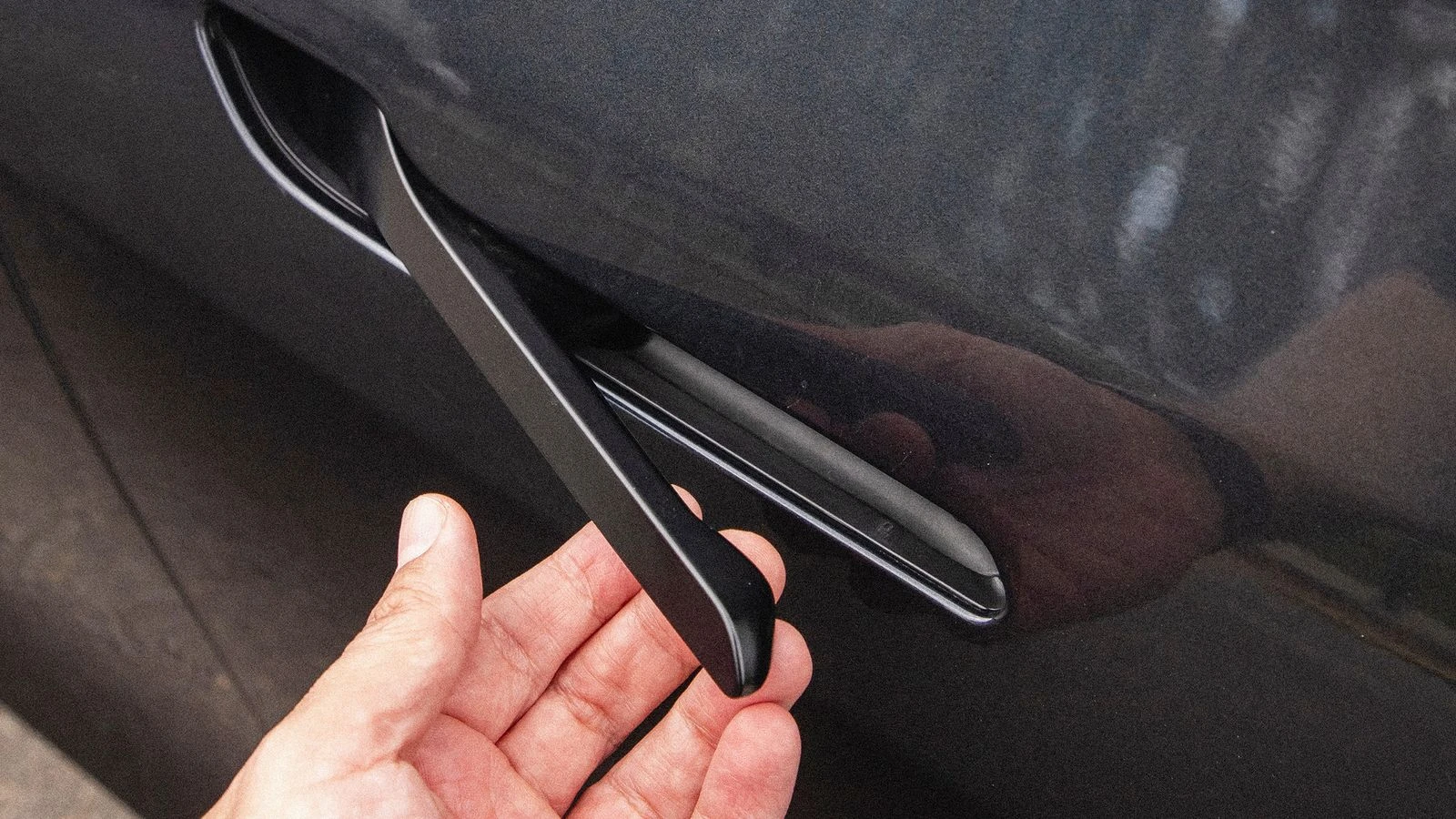
Car Door Handle Conundrums: A Global Automotive Industry Challenge
I. Tesla’s Door Handle Woes
Car door handles, seemingly unassuming components, have emerged as a significant talking point in the automotive realm. Tesla’s electronic, retractable door handles, which have been emulated by numerous global automakers, symbolize the company’s design – first approach, envisioning the future of electric vehicles.
However, in September, the National Highway Traffic Safety Administration (NHTSA) initiated an investigation into the door handles of the 2021 Tesla Model Y. According to a Bloomberg report from last month, over 140 consumers have lodged complaints with the NHTSA. Drivers have alleged issues such as handles getting stuck or malfunctioning, particularly when the vehicle’s low – voltage batteries fail. Government filings spotlight concerns from parents, stating that children were trapped inside vehicles after adults exited, unable to locate or activate the rear – door mechanical releases. The agency reports that at least four individuals claimed to have had to “break a window to regain entry into the vehicle.” Subsequently, Tesla has pledged to redesign the handles.
On Friday, the family members of two California teenagers who tragically died after the Cybertruck they were in caught fire following a crash sued the automaker. The lawsuit alleges that Tesla was aware of the difficulties in manually opening its doors prior to the teenagers being trapped.
II. Chinese Regulations Set to Impact the Global Auto Market
Now, new Chinese regulations are set to address the door handle issue in the world’s largest automotive market. Given the scale and influence of China’s auto market, these rules could soon spread to other parts of the world.
A. Proposed Chinese Regulations
The Ministry of Industry and Information Technology of China posted proposed rules last month. These rules, which are set to be finalized after a comment period ending in late November, stipulate that every car must be equipped with mechanical release handles on both the inside and outside. These handles must be operable without tools in the event of an accident. Additionally, the rules seem to discourage flush door handles by mandating that automakers design handles with sufficient space for a hand to grip behind them.
If finalized as drafted, these regulations could come into effect as early as mid – 2027. Considering the multi – year vehicle design and development processes of global automakers, this deadline is approaching rapidly.
B. Challenges of Compliance
Making swift door handle changes presents a costly and complex challenge. The extent of this challenge depends on each automaker’s design. Amy Broglin – Peterson, who teaches supply chain management at Michigan State University’s Broad College of Business and consults in the automotive industry, notes, “There’s a real – estate problem in the door space.” With electronics, insulation, wiring for other components, speakers, and more packed into doors, “Any design change can disrupt other elements,” she states.
These issues extend beyond design. The auto manufacturing industry adheres to strict production schedules. Although time is allocated to validate and test new features in each model, a sudden design change late in the process can derail the delicate production timeline.
Despite China’s remarkable progress in the auto industry, rapidly complying with these new design regulations will not be straightforward for domestic automakers either. Broglin – Peterson remarks, “Mechanical release requires a mechanical assembly. It’s not just about writing some code.”
Moreover, the impact of these Chinese rules is likely to reverberate globally. China, which has previously led the world in setting guidelines for electric vehicle battery safety, recycling, and autonomous vehicle technology, may once again set the standard. Bill Russo, CEO of Automobility, a Shanghai – based advisory firm, wrote in an email, “This is a classic example of China setting the guardrails early: protecting consumers while quietly shaping global design standards.”
III. The Rise and Fall of Flush Electronic Door Handles
A. The Allure of Flush Electronic Door Handles
Raphael Zammit, chair of the transportation design department at the College for Creative Studies in Detroit, notes that for years, flush electronic door handles were the stuff of futuristic concept cars. “The fact that Elon Musk and Tesla put it into production was, frankly, quite remarkable,” he says. Their popularity was closely tied to the growing prevalence of electric vehicles, as tucking door handles into the doors was intended to reduce the drag coefficient and improve battery efficiency. While back – of – the – envelope calculations suggest this might add a mile of range, at best, these handles became a “marker of luxury,” according to Zammit.
Electronic door handles are now found on many luxury vehicles, including those from Volkswagen, General Motors, Ford, and Mercedes – Benz. Jake Fisher, senior director of the Consumer Reports’ Auto Test Center, has tested several of these vehicles’ electronic handles. Although all had emergency mechanical releases as per the Chinese regulations, some were located in hard – to – find places in an emergency, such as on the floor, in shadows, or, as in the case of the 2021 Model Y under NHTSA investigation, under a slot at the bottom of the rear – door pocket. Consumer Reports determined that the most effective emergency mechanical releases were those that required a slightly harder pull than normal, an intuitive action in an emergency.
B. Automakers’ Responses
Tesla appears to recognize this. Tesla head designer Franz von Holzhausen told Bloomberg News, “The idea of combining the electronic one and manual one into one button makes a lot of sense.” The automaker is now redesigning the door handle, integrating an internal mechanical release with the electronic version. “It really helps the muscle memory of reaching for something that’s there every day, so you intuitively do the same thing” in an emergency, he said in an interview. Tesla, which disbanded its public relations team in 2020, did not respond to WIRED’s questions, including those regarding why the changes were not made sooner and whether the proposed Chinese rules would necessitate further redesigns.
Consumer Reports’ Fisher comments, “As with the door handles, we do see automakers literally reinventing the wheel for no good purpose with mechanisms and designs that are demonstrably worse.”
The US electric automaker Rivian is also reportedly redesigning the flush, electronic door handles on its next – generation SUVs and trucks, moving the rear manual interior release from its current location behind an unlabeled panel. Although the automaker does not sell vehicles in China, a spokesperson declined to comment on the report, stating that Rivian’s current and future vehicles “meet or exceed all Federal Motor Vehicle Safety Standards, including passenger egress from all doors in the event of a crash or emergency.”
However, automakers have been reticent about how the Chinese rules will impact their designs. General Motors is reviewing and providing technical input to China’s Ministry of Industry and Information Technology, spokesperson Bill Grotz wrote in a statement. “Until the new regulations are finalized, we cannot comment on vehicle portfolio implications,” he added.
Mercedes – Benz spokesperson Yifei Wu stated that Mercedes – Benz vehicles are designed to unlock and extend their exterior door handles when the air – bag units detect a crash. “We are watching this topic closely and will of course adapt accordingly, if this [Chinese] proposal will change anything in the requirements,” she wrote.
Ford and Volkswagen did not respond to WIRED’s requests for comment. However, last month, VW CEO Thomas Schäfer told German DW News that customers prefer mechanical buttons and handles that are easy to use. “It’s all nice to have these flush door handles, but they are terrible to operate,” he said. “We definitely have proper door handles on the cars, and customers appreciate it.”