 由 admin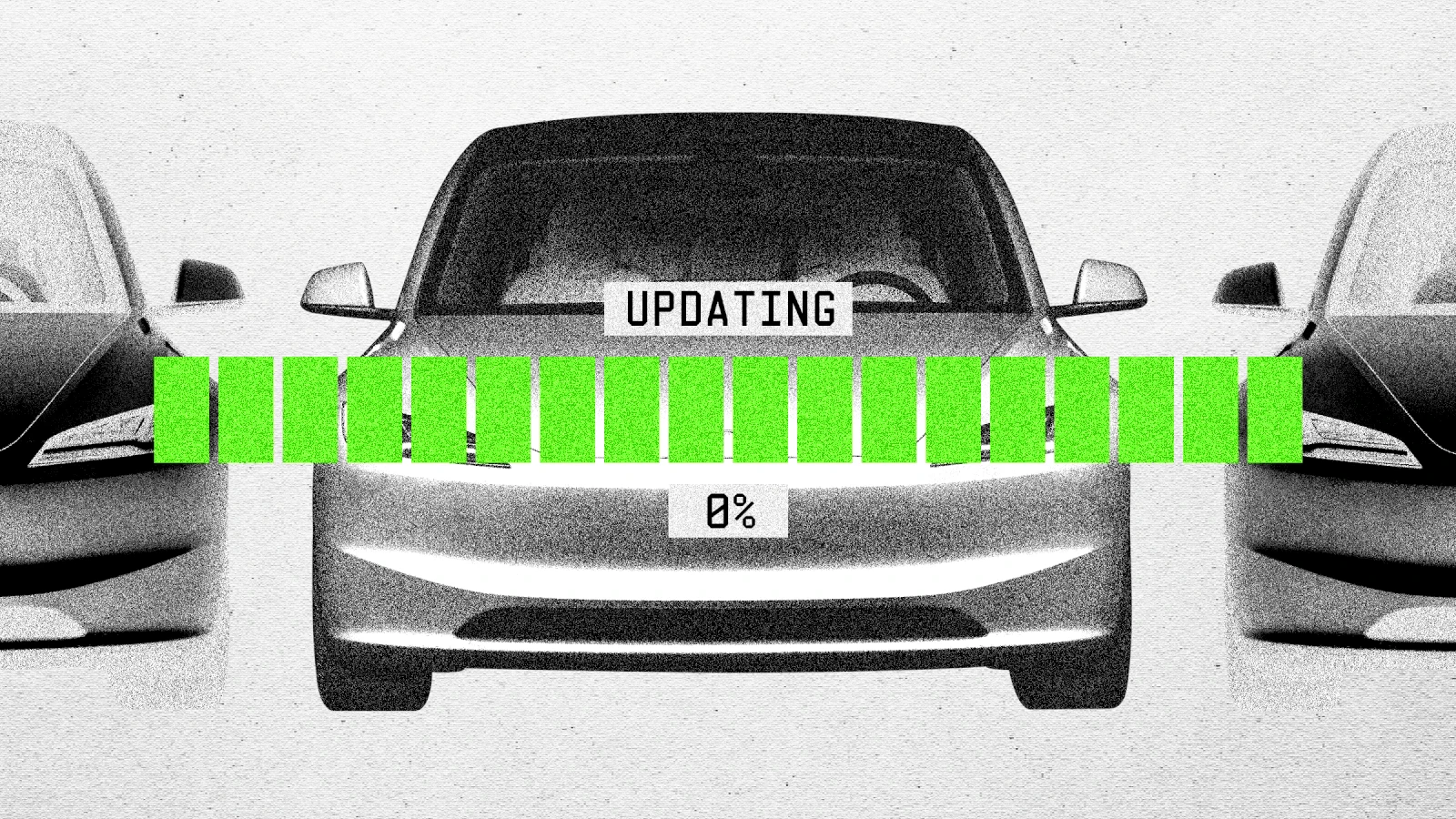
The Landscape of Over – the – Air (OTA) Software Updates in the Automotive Industry
I. Tesla’s OTA Dominance
Despite substantial efforts and billions of dollars invested over the years, no automaker globally has yet replicated Tesla’s proficiency in delivering over – the – air (OTA) software updates. Similar to the updates on phones and laptops, these operating system refreshes enable car owners to remotely upgrade their vehicles.
Tesla introduced OTAs in 2012, and currently, Elon Musk’s company is unparalleled in the frequency of these updates. Jean – Marie Lapeyre, Capgemini’s CTO for automotive, informed WIRED that “Tesla once issued 42 updates within six months.” In contrast, Lapeyre noted that many other automakers might release OTAs only “once a year.”
II. Software: A Differentiating Factor
For traditional car manufacturers, software has long been, or until recently remained, just one of numerous add – on components. Conversely, for Tesla and other digital – native automakers such as Rivian, Lucid, Polestar, and Chinese brands like BYD, Xpeng, and Xiaomi, software is nearly the core of their offerings.
Interestingly, General Motors (GM) was the first to introduce OTA functionality, two years ahead of Tesla. However, GM’s OTA was initially limited to the OnStar telematics system. Traditional automakers’ OTAs often merely introduce infotainment adjustments, while those from digital – first brands can bring more significant changes, such as increasing vehicle range and speed. These brands also offer a wide range of features, from the somewhat frivolous (like Tesla’s fart noises on demand) to the highly functional (such as Rivian’s plusher suspension and Polestar’s phone – based car unlocking).
III. The Rise of Software – Defined Vehicles (SDVs)
Cars have had onboard microprocessors since the 1970s. Until relatively recently, traditional automakers designed their cars with software that remained largely static throughout a vehicle’s 20 – year lifespan. McKinsey estimates that since 2021, the complexity of the latest vehicle software platforms has increased by approximately 40 percent annually. S&P Global reckons that there are now 69 million OTA – capable vehicles in the US.
Automakers hoped that such software – defined vehicles (SDVs) would boost car sales. According to two scorecards gauging SDV progress, Tesla leads the field. Gartner’s Digital Automaker Index for 2025 places Chinese EV manufacturers Nio and Xiaomi in second and third positions, respectively. Wards Intelligence concurs that these three are the frontrunners. At the other end of the spectrum, Nissan, Toyota, Mazda, and Jaguar Land Rover, similar to the Wards analysis, rank at the bottom.
IV. Saving and Selling through OTAs
When implemented correctly, OTAs not only enhance a car’s user experience but can also significantly reduce automakers’ recall costs. In 2024, over 13 million vehicles were recalled due to software – related issues, a 35 percent increase from the previous year. Prior to OTAs, the average cost of an auto recall was around $500 per vehicle. Although OTAs are delivered wirelessly, they are not without cost, either for the environment or for automakers. Harman Automotive, an OTA software supplier, estimates that it costs an automaker $66.50 per vehicle to deliver a 1 – GB update.
Typically, only digital – native automakers send out large update files, as generally only they are capable of firmware over – the – air (FOTA) updates. These can update powertrains, battery management, and braking systems. FOTA capabilities require cars (usually EVs) to have reliable, persistent connectivity and substantial computing power, much of which is reserved for future updates. For example, Lucid’s Gravity electric SUV is equipped with the latest Nvidia Orin – X processor and 512 GB of onboard storage, yet its vehicle OS occupies only 100 GB, leaving ample space for future OTA refreshes.
As Western car company revenues decline, automakers are exploring ways to monetize OTA – enabled subscriptions. For instance, paying Tesla $2,000 for the optional Acceleration Boost can unlock over – the – air performance improvements, making an EV accelerate more quickly. For an additional $10 per month, Tesla’s “premium connectivity” package offers streaming data, live sentry cams, and other features. The so – called Full Self – Driving (FSD) Supervised feature, which some critics consider misleadingly named, is available for an extra $99 per month.
Morgan Stanley predicted in 2021 that “We believe… that the value of Tesla’s recurring software revenue may exceed the value of its hardware business.” However, selling subscriptions is not without challenges. In 2022, BMW attempted to charge some customers a monthly subscription to activate the seat heating coils already installed in their cars. Due to negative feedback, the plan was scrapped.
V. Harvesting and Bricking Concerns
Automakers may face further negative feedback as customers become more aware that OTAs can also operate in reverse. Cars can not only download but also upload data.
In 2020, Tesla’s then – head of AI, Andrej Karpathy, publicly discussed Tesla’s Shadow Mode at a machine learning conference. This mode mirrors human driver actions, and snapshots are uploaded to Tesla for use as training data for Full Self – Driving. Since 2016, petabytes of snapshots have been collected, including some camera footage, as well as speed, acceleration, and other parameters. This data harvesting is permitted by the Terms and Conditions that owners sign.
Bricking is another concern. Manufacturers can, at their discretion, downgrade their products, as Chinese consumers discovered earlier this year. The $73,000 Xiaomi SU7 supercar lost 648 horsepower in an overnight OTA. Xiaomi stated that the horsepower would only be restored if drivers, through track sessions, demonstrated their ability to handle the super – fast car, which can accelerate from 0 to 60 mph in less than two seconds. Owners protested, demanding the return of the horsepower they believed they had paid for, and Xiaomi soon relented.
Given Tesla’s Silicon Valley origins, it is not unexpected that its software – first ethos (predating Musk) comes with a tech startup’s willingness to take risks. Only after receiving scathing reviews did Tesla improve certain safety – critical features. In a 2018 Consumer Reports test, the Model 3 was criticized for its poor stopping power, and the antilock braking system was promptly fixed via an OTA.
William Wallace, manager of safety policy at Consumer Reports, told Reuters in 2022 that “Over – the – air software updates come with promise, and they come with peril. A two – ton vehicle is not the same as a computer. Automakers and their suppliers need to treat software that relates to safety like it’s a life – and – death issue.”
In 2022, the National Highway Traffic Safety Administration ordered Tesla to issue a recall to prevent FSD (Beta) from making illegal rolling stops instead of coming to a complete halt at some intersections. Musk denied there was an issue, stating, “The car simply slowed to ~2 mph & continued forward if clear view with no cars or pedestrians.” Nevertheless, Tesla issued an OTA to disable the creep function. Tesla did not respond to a request for comment on this article.
Unlike workshop recalls, OTA recalls typically do not inconvenience vehicle owners. Crucially, the completion rate for OTA recalls often reaches 95 percent or more, while physical recalls may have a completion rate of only half that.
VI. The AI – Infused EV Trend
Most modern cars from traditional automakers contain 100 or more microprocessor – equipped electronic control units (ECUs). Technologies such as advanced – driver – assist systems, adaptive cruise control, automatic emergency braking, and electronic stability control have led to an increase in ECUs and code. With the addition of infotainment, modems and SIM cards, sensors, and navigation features, EVs, in particular, have become powerful, always – online mobile computing centers.
Automakers of all types are now aiming to produce AI – infused cars with a central compute rather than distributed ECUs. However, there is a risk that consolidating multiple small boxes into fewer boxes, each with its own CPU, could compromise safety – critical hardware. Rivian’s original R1T electric truck had 17 ECUs; the latest version has only seven. Chip architect Arm’s new, yet – to – be – deployed Zena Compute Subsystems for Auto platform features a safety island and a security enclave to prevent attacks such as virus infections or other hacks, and is rich in neural network technology.
Dipti Vachani, senior vice president and general manager of Arm’s automotive business, states, “The move to AI in the car is absolutely happening.” Volvo signed a deal with Google’s Gemini in May. Many Chinese car owners are already interacting with DeepSeek. For newer models, Tesla has enabled the use of xAI’s Grok, the chatbot that recently made controversial claims.
Traditional automakers source their ECUs from various electronics suppliers. Ford CEO Jim Farley told the Fully Charged Podcast in 2023, “We have about 150 of these” ECUs. “The problem is that the software [for them] is written by 150 different companies, and they don’t talk to each other. So even though it says Ford on the front, I actually have to go to Bosch to get permission to change their seat control software.” Now Farley has launched a plan to revolutionize car – making, bringing much of this technology in – house to address these issues.
In 2003, German firms BMW, Mercedes – Benz, VW, Bosch, Continental, and Siemens collaborated on a software framework called AUTOSAR (Automotive Open System Architecture) to standardize electrical and electronic system architectures. This multi – layered protocol is now rather dated but is still prevalent among most traditional automakers.
Today’s automotive software coders do not particularly favor this framework. One coder mocked on Reddit that it took “an entire Italian restaurant’s worth of spaghetti code just to blink an LED.” An exasperated engineer added, “I would rather shove a shotgun in my ass and blow my god damn balls off than ever lay my eyes on AUTOSHIT ever again.”
VII. Phones to the Rescue?
Arm’s Vachani emphasizes that automakers “have got to be able to update software [quickly],” adding that consumers “don’t want a hunk of metal anymore. We want this ever – evolving thing. There’s not one [automaker] that isn’t thinking about how they move forward in this software – defined world.”
A novel approach to the software – defined vehicle is demonstrated by the $25,000 truck from Slate Auto. Backed by Jeff Bezos and other prominent investors, this Michigan – based startup aims to produce a stripped – down, no – frills EV truck with manually operated windows and no infotainment system. The truck will not come with a modem or SIM card. Instead, owners will use their phones to download OTA updates and then transfer them to the truck via a connection.
However, unlike smartphones, motor vehicles are subject to strict software safety standards, such as ISO 26262. This requires rigorous validation of automotive software before deploying OTA updates, which slows down progress and currently restricts auto brands.
Florian Rohde, who worked for Tesla from 2012 – 2018, co – creating the company’s OTA capabilities and later for Nio, states, “Companies that have been around for 100 years have this huge problem. Their strategies and their processes have been established for a long time. [Some auto executives] don’t want to change, because they fear they’ll lose influence and power in their company.”
Rohde also notes, “Traditional car makers [were also] extremely hesitant with software—they were afraid, rightfully, that their product would at some point hurt somebody. But they didn’t understand DevOps, where you monitor and improve continuously. When we started selling the first [Teslas], we had to improve them because they weren’t perfect. We were able to fix bugs and make software changes at very short notice. Established car makers are really slow.”
Rohde continues that Tesla’s OTA prowess was built by a small core team that enabled rapid decision – making among a talented group, without having to consult multiple levels of company hierarchy.
Outside of China, Tesla is likely to remain the leader in remote updates, at least for the time being. Rohde says, “Tesla was not successful because it’s electric, or because it’s an SDV and OTA [pioneer]; and Tesla is not successful because it has this huge back – end [with details of every car], or charging network. Tesla was successful because it had all four.”
However, Tesla is not as successful today. Musk’s political activities and the company’s now – outdated products have led to a significant decline in global sales. Additionally, there is increased competition, especially from China. Before venturing into car – making, two of China’s more notable automakers, Huawei and Xiaomi, were and still are cell – phone manufacturers. For several years, iPhone maker Apple was rumored to be launching a car, and if Project Titan had produced a consumer EV, it likely would have had excellent OTA capabilities.
Sid Odedra, UX lead at Polestar and formerly of Nio and Audi, states that it is telling that Apple seemingly was unable to simplify car operating systems and their OTAs, saying, “It’s not a simple problem to solve.”