 由 admin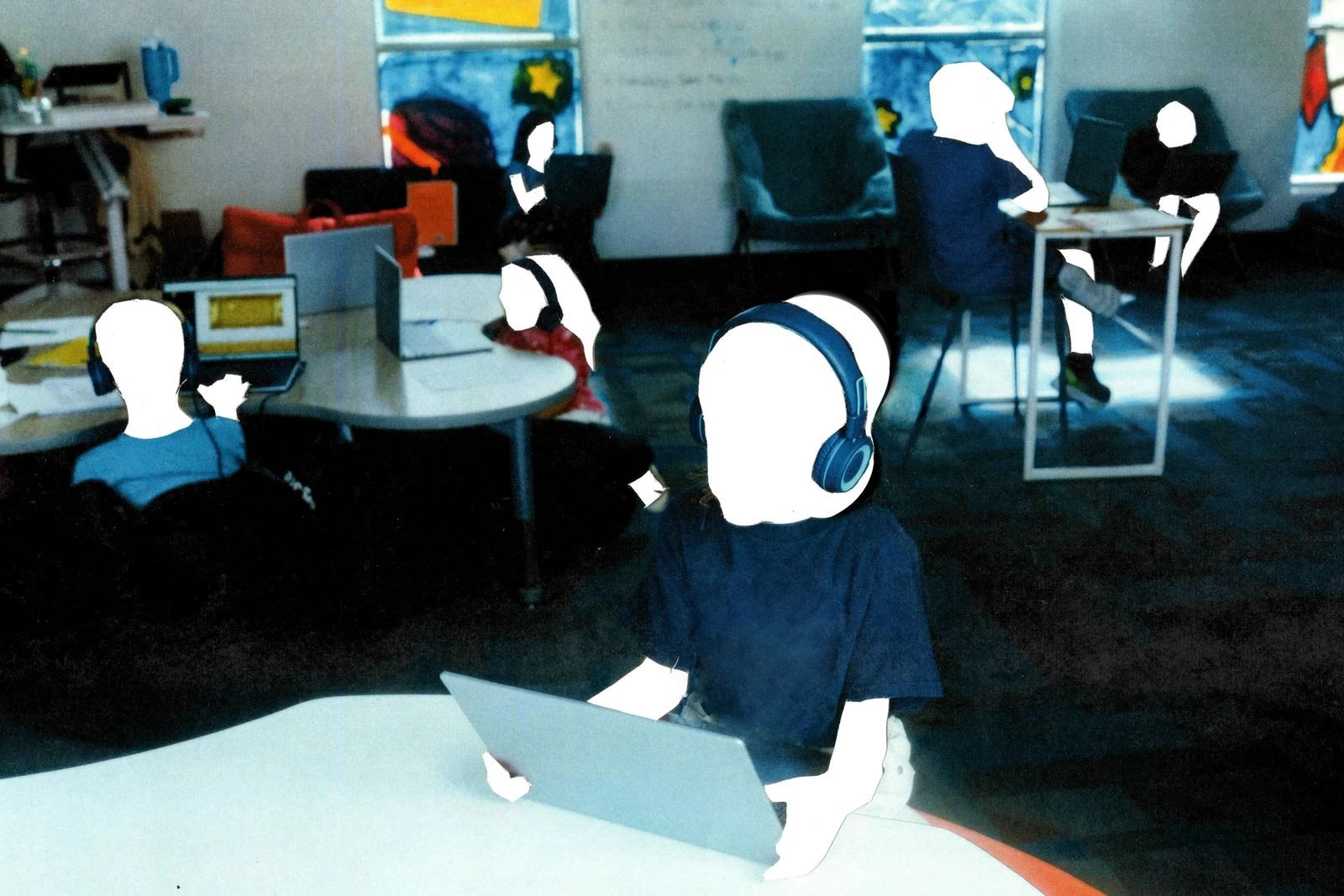
Alpha School: A Controversial Educational Model Under Scrutiny
I. Introduction: A Child’s Struggles at Alpha School
One day in the fall, Kristine Barrios’ 9 – year – old daughter encountered significant difficulties with a lesson on IXL, the personalized learning software serving as her math instructor at Alpha School. The task involved multiplying three – digit numbers without a calculator, and she was required to repeat this process over 20 times without errors.
At Alpha School in Brownsville, Texas, where the girl and her younger brother studied, she had been advanced in math, working a grade level above her age. Despite being able to perform three – digit multiplication accurately most of the time, the IXL software, upon detecting an error, would assign additional practice questions. The girl’s request to her “guide” (the adult overseeing the classroom in place of a traditional teacher) to allow her to progress was denied, with the guide insisting she complete the tasks.
Over the following weekend, Barrios and her husband spent hours each day assisting their daughter. Despite her distress, bordering on suicidal thoughts, they persevered until she finished the lesson. Barrios even double – checked the answers with a calculator before her daughter entered them. However, upon returning to school, the girl learned that she had fallen further behind her targeted goals during the time she was stuck on the lesson.
II. Health and School – Related Concerns
Within a couple of weeks, the school informed Barrios and her husband that their daughter was skipping lunches. According to Barrios, Alpha School attributed this to the girl’s preference to stay in and work. In reality, the girl was using lunchtimes to catch up on IXL. (IXL representatives stated that Alpha School’s account was deactivated in July due to terms – of – service violations and emphasized that IXL is not intended as a substitute for trained teachers.)
Shortly after, during a routine check – up, the doctor noticed the girl had lost a significant amount of weight. Her father provided a note from the pediatrician instructing her to eat snacks between meals. Initially, she ate the snacks, but later, she returned home with uneaten snacks in her backpack. She told her mom that school staff said she didn’t earn her snacks and wouldn’t receive them until she met her learning metrics.
In November, Barrios withdrew both her children from Alpha School. She was part of a growing number of families leaving the Brownsville campus. Despite the departures, Alpha School continues to showcase Brownsville as a success story of its 2 Hour Learning model in disadvantaged communities.
III. The 2 Hour Learning Model and Alpha School’s Growth
The 2 Hour Learning model, used at Alpha School and its sister schools, aims for students to spend only two hours daily on “learning sessions,” with personalized learning software (referred to as an “AI tutor” on the 2 Hour Learning homepage) doing the teaching. MacKenzie Price, one of the founders, claimed that students learn twice as much in less time, though Alpha has yet to share the standardized test data to support this claim.
Alpha School’s bold promise has propelled it from a small Texas private school to an emerging educational empire. It has gained the support of the Trump administration, wealthy individuals like Joe Liemandt (the school’s “principal”), hedge fund manager Bill Ackman, and LinkedIn co – founder Reid Hoffman. The school is expanding nationally, with new campuses in multiple states and an affiliate charter school, Unbound Academy, enrolling students in Arizona.
IV. Divergent Views on Alpha School
While some students, like an older student at the Brownsville campus, appreciate the school and want to continue with a similar model, more than a dozen former employees, students, and parents interviewed by WIRED expressed dissatisfaction. Former “guides” say the educational philosophy was driven by software metrics and sometimes the whims of Liemandt. Parents like Barrios claim the school set their children up for failure and then punished them for it.
In response to WIRED’s requests for comment, Alpha School initially provided partial responses in a Google Doc, which was later rescinded. The school later claimed to have records contradicting the reporting but provided no further substantive replies after multiple deadline extensions.
V. Origins of Alpha School and the Concept of Personalized Learning
The concept of personalized learning has roots in B. F. Skinner’s work in the 1950s. After the digital revolution, personalized learning software became more adaptive. In 2014, a group of wealthy families from Austin, including Brian Holtz and MacKenzie Price, founded Emergent Academy, later renamed Alpha School in 2019. The core philosophy was to let the apps do the teaching.
Tech billionaires like Mark Zuckerberg and Priscilla Chan, as well as the Bill and Melinda Gates Foundation, also supported the idea of personalized, software – based curricula. Initially, Alpha School applied its models to wealthy, white, college – educated families in Austin. With the Brownsville campus, it expanded to a different demographic.
VI. Parents’ Initial Attraction to Alpha School Brownsville
Parents in Brownsville were attracted to Alpha School for various reasons. Kristine Barrios was drawn to the school’s vibrant lobby mural and unconventional seating. Jessica Lopez wanted her daughters to learn at their own pace and was interested in the life – skills workshops. Silvia Solis and Juan Jose Garcia wanted their children to attend school with neighborhood kids. Others enrolled to escape bullying or for a flexible schedule.
In the first year, the school had a dedicated staff that created a fun, if chaotic, learning environment. Some students, like Lopez’s older daughter, were motivated and earned rewards. The school also had regular breaks, which parents appreciated.
VII. Changes and Challenges at Alpha School
Around the time the Brownsville campus opened, Joe Liemandt took over as principal, and the school became more focused on academic rigor. Students at the Austin campus had opportunities like designing custom sandals and winning trips. At the end of the first year, Barrios’ daughter was selected as an “ambassador” to give tours to prospective SpaceX parents. Liemandt later said Alpha chose Brownsville because of the influx of SpaceX employees.
The following fall, Alpha introduced a new “Limitless” version. Barrios felt the focus shifted from the students to metrics and data. At Alpha Brownsville, the school has a corporate – like atmosphere, with features like soundproofed phone booths for testing and a display of toys for rewards. Lessons are conducted quietly, with guides providing minimal teaching and students relying on software.
The academic coaches associated with Alpha are often employees of Liemandt’s companies, and many are based outside the US. Some guides lack teaching experience. Alpha also uses surveillance tools to monitor students’ app usage, and parents must consent, with limited privacy on campus.
VIII. Student Struggles and Parental Concerns
Some students, like Lopez’s older daughter, struggled to meet the software – set goals, leading to stress and self – harm. Parents also criticized the lack of a well – rounded curriculum. Arizona State Board approved Unbound Academy’s charter, but other states, including Pennsylvania, rejected its proposals due to concerns about the untested AI model and vague curriculum.
Students from Alpha Brownsville had gaps in their education, such as reading without comprehension, poor writing skills, and lack of knowledge in certain subjects. Parents felt that Alpha used their children as a marketing tool while their kids suffered. After leaving Alpha, students like Barrios’ daughter gradually regained their well – being, but it took time to re – ignite their love for learning.