 由 admin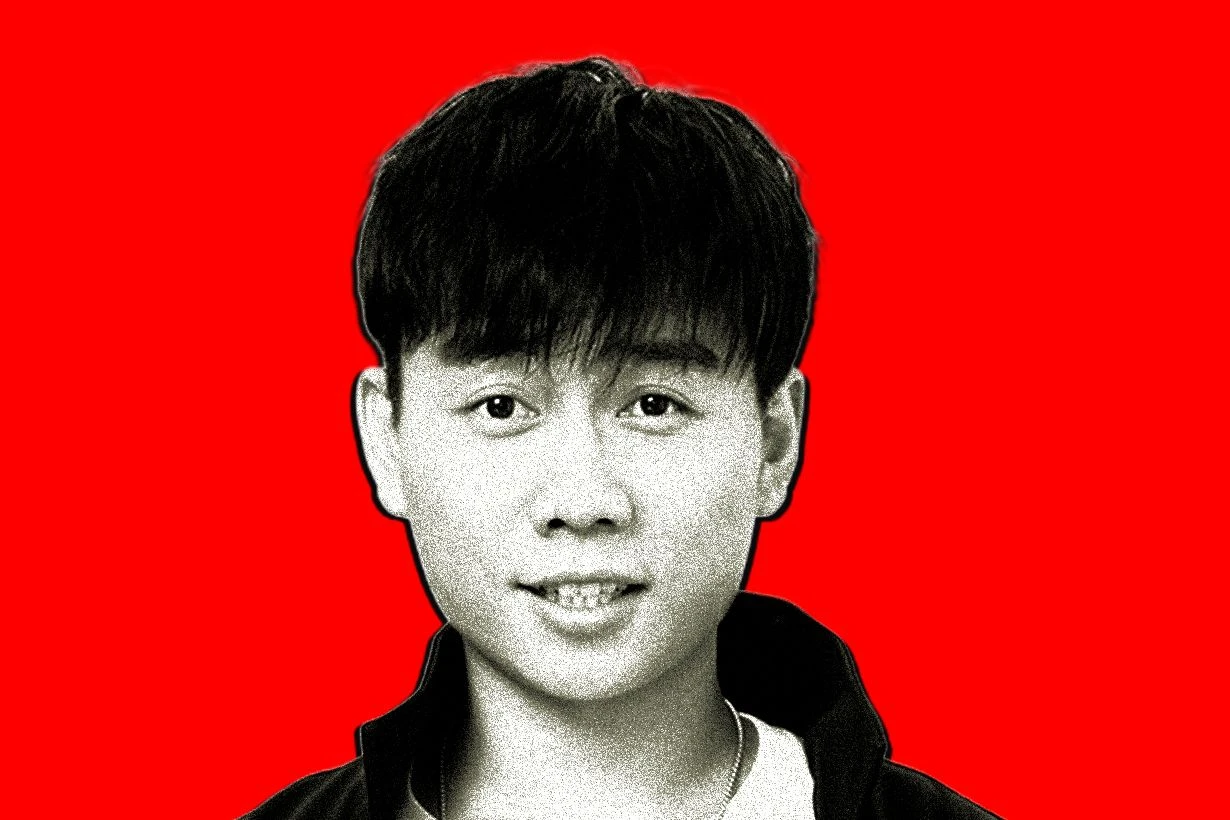
“How a Chinese Comedian Mimics AI and the Broader Implications for the Acting World”
I. The Viral AI – Imitation Video
Our digitally – immersed readers may well have come across a video that originated on Chinese social media platforms. In this video, two individuals, initially giving the impression of being on the verge of a physical altercation, abruptly transition into a romantic yet somewhat robotic tango dance sequence. Moments later, they seemingly conjure a wine glass and a bowl of noodles from thin air. The video’s surreal nature gives the initial impression of being AI – generated, yet it is, in fact, the product of human ingenuity.
The mastermind behind this video is 29 – year – old Tianran Mu. In a recent conversation, Mu, who is the one seen holding the noodles in the video, revealed that he was largely unaware of the video’s extensive reach. On the platform X, two users who shared his video amassed a combined view count of over 11 million. Additionally, reposts on Reddit, TikTok, and Instagram garnered tens of thousands of likes. Mu, who does not have a presence on these international platforms, had little knowledge of his sudden international fame and had never been interviewed by international media prior to this.
II. Mu’s Imitation Prowess
Mu is not the sole comedian to attempt mimicking the style of AI – generated videos. However, he has a unique ability to capture all the essential elements. His portrayal includes clumsy bodily movements, vacant facial expressions, and unpredictable plot progressions. Many viewers, including this author, were astounded by his accurate capture of the essence of AI – produced content often referred to as “AI slop videos.”
Mu shared that the half – dozen AI – imitation videos he has created represent only a fraction of his acting career. Since his college days, he has harbored the dream of becoming an actor. During the summer following his freshman year, he sought background acting opportunities at Hengdian World Studios, the world’s largest film studio. In 2019, he began creating comedy sketches on Chinese social media, and content creation now occupies a significant portion of his time.
III. Sponsorship and the AI – Human Dilemma
The success of his AI – imitation videos led to a sponsorship deal with a Chinese generative AI company. The company paid him 80,000 RMB (approximately $11,000) to produce two additional sketches promoting their video model. As part of this sponsorship, Mu shot two versions of the sketches: one incorporating AI – generated footage and another without it. Secretly, Mu hoped the advertiser would choose the version that spotlighted human acting skills. Unfortunately, the advertiser opted for the AI – infused version. Mu remarks, “That kind of gives the impression that AI is starting to encroach on the territory of human actors, doesn’t it?”
Last week, Mu reappeared on our radar with a sequel to his first AI – imitation series. This time, he was mimicking videos created by Sora, OpenAI’s latest generative video tool. His new video is more nuanced but still manages to capture that peculiarly unsettling feeling, despite the advancements in AI video technology.
Mu posits that as AI continues to evolve at an accelerated pace, there is an ongoing battle. However, this is not a man – versus – machine conflict. Instead, it is a clash between humans and those who develop AI models, with each side constantly striving to outdo the other. “We’re highlighting some of AI’s flaws, its eeriness and absurdity, but the AI creators are likely working on improving these aspects. Look, this year’s AI already appears much more human – like,” Mu observes.
IV. How to Act Like AI: Mu’s Techniques
Before creating his first AI – imitation sketch in July 2024, Mu dedicated significant time to studying AI – generated videos to identify their common traits. He aimed to understand the typical mistakes AI makes and incorporate them into his scripts.
For instance, AI often misinterprets the purpose of objects in a frame. A hanger, which is primarily used for hanging clothes, also has an alternate use in some Chinese households as a disciplinary tool. This dual – use inspired one of Mu’s videos. In the video, while pretending to hit his “son” with a hanger, the boy’s shorts unexpectedly come off, and Mu then seems to forget his initial action and decides to hang up the shorts instead.
Another prevalent issue in AI – generated videos is the lack of continuity. Objects may change shape, and human appearances or outfits can vary unpredictably. In Mu’s most popular video, many viewers failed to notice that two different actors portrayed the same role to replicate this lack of consistency. (Mu’s college friends, who have regular day jobs, participate in all of his videos.)
Perhaps the most uncanny aspect of many AI – generated videos is the strange expressions on people’s faces. Mu noticed that the AI’s gaze often wanders, looking in different directions erratically. He remarks, “When I’m supposed to be talking to you, my eyes might be focused on someone else. In short, it’s unnatural, so I just act unnaturally.”
Late last month, OpenAI released Sora, a social media app enabling users to generate and share short AI videos. Mu found it more challenging to identify flaws in Sora – generated videos but still discovered a few. Besides the wandering gaze and timeline inconsistencies, Sora – generated human characters often laugh in an exaggerated and off – putting manner, with their hair shaking vigorously in the air. Mu imitated this laugh in his recent video, which once again resonated with his Chinese followers.
Mu states that he has no immediate plans to create another Sora – imitation video, partly because the video quality has improved to the point where creating parodies has become nearly impossible. “By this time next year, we might genuinely have nothing left to imitate. If I try to act it, I’d just be acting like a human,” he comments.
V. Will AI Replace Actors?
Many commenters have expressed that Mu’s videos have reassured them that AI cannot replace human actors. However, Mu himself is less certain. As a director and content creator, he acknowledges the potential of AI to revolutionize the movie – making industry. He anticipates that within the next two years, movie directors and producers will likely make extensive use of AI.
Yet, as an actor, he is fearful. Apart from his social media sketches and small – scale TV commercial gigs, Mu has not landed any significant acting roles recently. Competing with fellow dedicated actors is already arduous, and the looming threat of AI actors taking his job adds to his concerns.
Mu has refrained from using AI – generated footage in his content (except for sponsored posts) as he wishes to be recognized for his acting skills. His WeChat avatar depicts him looking at a birthday cake with a replica of an Oscar trophy on it, as winning an Oscar is his lifelong dream. “My ultimate aspiration is to write, direct, and star in my own movie and win an award for it,” Mu declares.
This article is part of Zeyi Yang and Louise Matsakis’ Made in China newsletter. Read previous newsletters [here].